
Chortens, also known as Stupas, are religious structures that dominate the Bhutanese landscape, predominantly on mountain tops, hills and mountain passes, crossroads and along the rivers. Often known as burial mounds, chortens are built in memory of eminent lamas and kings or to pin down evil spirits. They are also built to protect a place or a region against evil spirits that are potentially dangerous, such as landslides and accident prone areas. 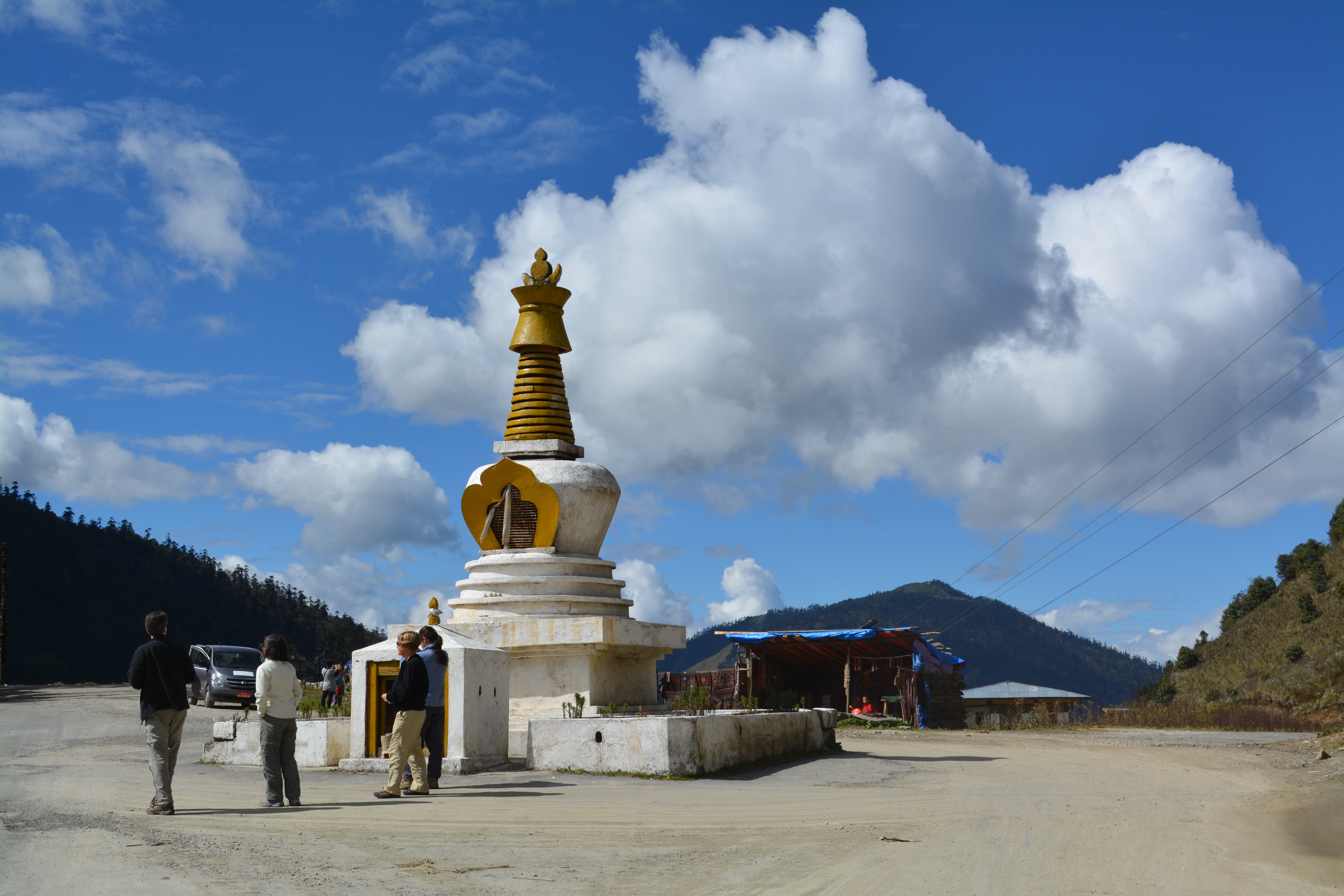 The term chorten literally means ‘receptacle’ of worship or offering. The primary architectural characteristics of most chortens are based on five symbolic elements – the square or rectangular base symbolizes the earth; the half-spherical dome symbolizes water; the conical or pyramidal spire represents fire; the crescent moon and the sun on top symbolize air, and a vertical spike symbolizes the sacred light of the Buddha. Chortens are sometimes also built in memory of an individual; to commemorate the visit of an enlightened sage; or to house sacred books or the relics and bodies of great lamas and saints.


 Tim Dreese's Travel Log & Design Journal
Pingback: Punakha Dzong, Kingdom of Bhutan | TravelBloggers.on.WordPress·
Loving you’re posts on Bhutan, I have been wanting to do some trekking through this part of the world. It looks amazing.
Great blog!
LikeLike
Thanks, Tommy for your comments . . . looks like you are creating some adventures of your own! If you would like more info on Bhutan, email me and I can perhaps provide more info. Bhutan was one of those “once in a lifetime” experiences for me.
LikeLike
Thanks mate, I just might do that 🙂
LikeLike
“Once in a lifetime” indeed. We haven’t yet had the fortune to visit Bhutan, but it is certainly on our wish list. How much time did you spend there?
LikeLike
We spent about 12 days in Bhutan, including the 5 days of trekking between Paro and Thimphu. More time, of course, would be required to experience the entire country (we did not have the chance to visit the eastern half of Bhutan. I highly recommend visiting this very friendly, very scenic and interesting part of the world.
LikeLike